
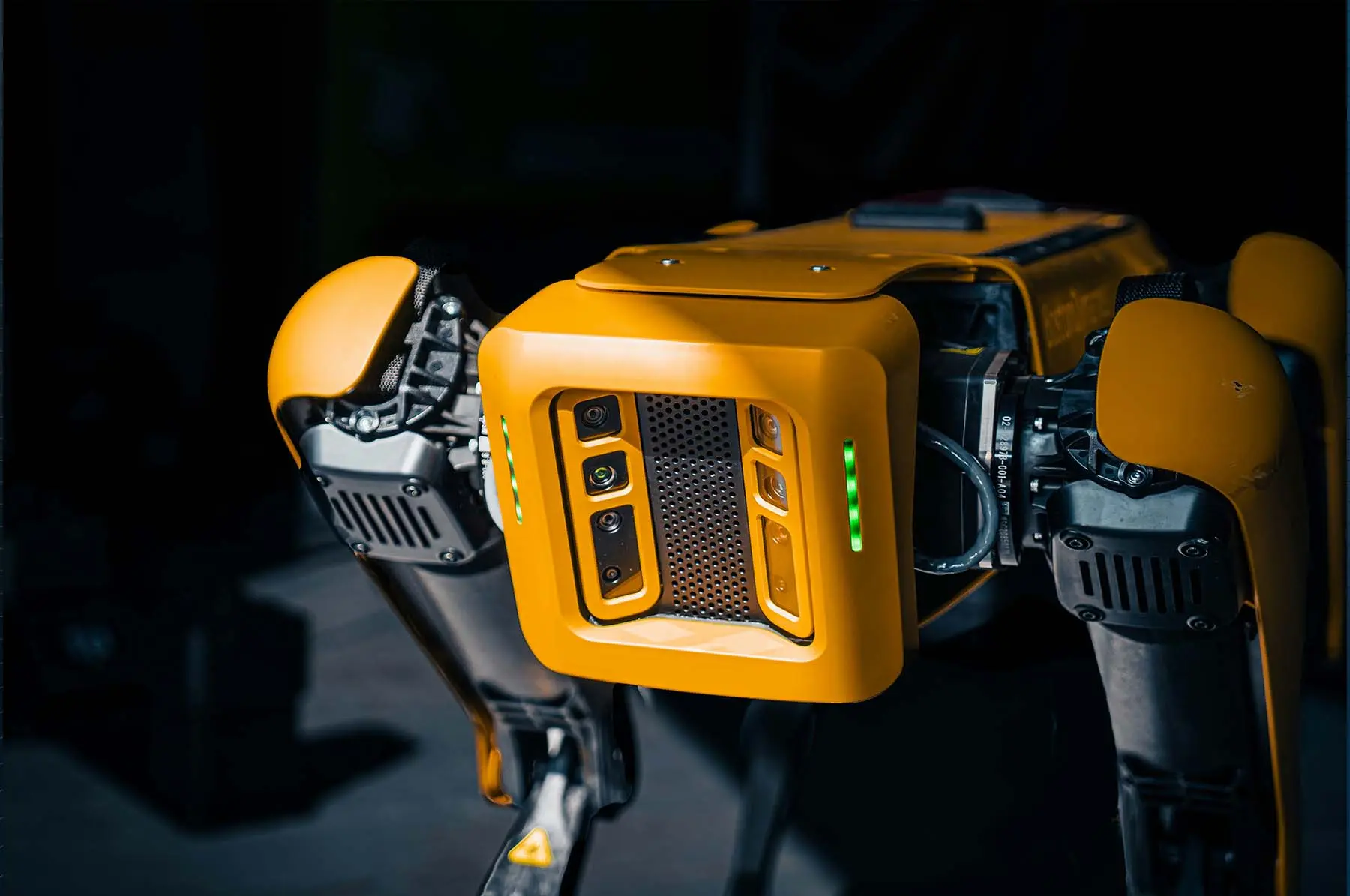
Automation is moving beyond the screen. Explore how physical robots are being integrated into daily operational workflows — and how they connect to the software you already use.
When people hear “robotics,” they think of car factories and sci-fi. But today, robots are showing up in warehouses, distribution centers, and light manufacturing — often right alongside people. And the really interesting shift? Those robots are no longer isolated. They’re connected to the same CRMs, ERPs, and workflow tools you already use.
Here’s what that means for operations teams.
The old way: robots as islands
Traditional industrial robots were programmed once and did the same thing forever. Pick this box. Weld that seam. They didn’t talk to your inventory system. They didn’t know when an order was rush. They just moved.
If something changed — a new product size, a different box — you hired an integrator to reprogram them.
The new way: robots as part of your workflow
Modern robots connect to your software stack. They can:
Read from your WMS (warehouse management system) to know what to pick next
Receive real-time priorities from your order management system
Alert your ERP when a bin is empty or a machine needs maintenance
Log their actions to the same audit trail as your human workers
A robot isn’t a standalone machine anymore. It’s an agent that takes physical action — just like a software agent updates a record or sends an email.
Where this shows up in operations
Warehouse picking – A robot gets an order from your WMS, navigates to the right bin, picks the item, and updates inventory in real time. No scanning. No paper lists.
Packaging and labeling – An autonomous system reads order details from your shipping software, prints the correct label, applies it, and logs the package weight — all without human touch.
Quality inspection – A camera-equipped robot scans products on a line, compares them against specs stored in your PLM (product lifecycle management), and flags defects to your quality system.
Material movement – Autonomous mobile robots (AMRs) move pallets or bins between zones. They know what’s urgent by reading your production schedule. They reroute themselves when a path is blocked.
The connection to your software stack
This is where most robotics conversations stop — and where we start. A robot that doesn’t talk to your ERP is just a moving machine. One that does becomes part of your automated workflow.
Example: An order comes in marked “rush.” Your OMS flags it. Your WMS prioritizes it. Your picking robot gets the instruction before a human would even see it. The robot picks, moves to pack, and updates the order status — all within seconds.
That’s not robotics alone. That’s robotics integrated with workflow automation.
What you actually need to know
You don’t need to become a robotics engineer. You need to ask:
Do our physical operations have repetitive, predictable movements? (Picking, packing, moving, inspecting)
Are those tasks currently manual or semi-automated?
Could a connected robot read from and write to our existing systems?
If yes, robotics might be part of your automation roadmap. And we can help you design the connection between the physical and the digital.